Why Micro-Goals Work Better Than New Year’s Resolutions, According to Psychology
Every January, many of us feel the pressure to reinvent ourselves. New Year’s resolutions promise transformation better mental health, healthier habits, stronger relationships. Yet by mid-January, most of these goals fade.Research consistently shows that nearly 88% of New Year’s resolutions fail, not because people lack motivation, but because the human brain is not designed for sudden, large-scale change.
From a psychological and neurobiological perspective, the issue isn’t discipline. It’s design.This year, consider replacing resolutions with micro-goals, evidence-based actions that work with your brain instead of against it.

Why the Brain Struggles With Traditional Resolutions
Most resolutions are broad and outcome-focused:
“Be happier.”
“Improve my mental health.”
“Get my life together.”
While well-intentioned, these goals place excessive strain on the brain’s executive systems.
All-or-Nothing Thinking Increases Dropout
Resolutions often create a rigid success failure framework. One missed day can trigger the
abstinence violation effect, a well-documented psychological response in which a minor setback
leads to complete disengagement.
This pattern is especially common in anxiety, depression, and addiction recovery where shame
quickly overrides motivation.
Executive Function Gets Overloaded

Major lifestyle changes depend heavily on the prefrontal cortex, responsible for planning, impulse control, and decision-making. Under stress or emotional exhaustion, this system fatigues easily.
When that happens, the brain defaults to familiar habits not because of weakness, but because it is conserving energy.
The Dopamine System Loses Interest
The brain’s reward circuitry thrives on frequent reinforcement. Large goals often delay gratification for weeks or months, which causes motivation to decline as dopamine release drops.
Without small, immediate wins, even the most meaningful goals lose traction.
What Are Micro-Goals?
A micro-goal is a behavior so small it feels almost effortless yet powerful enough to create momentum.
Micro-goals align with the Fogg Behavior Model, which explains that behavior occurs when motivation, ability, and a prompt converge. Instead of increasing pressure, micro-goals dramatically increase ability by making the task easier.
This approach mirrors what clinicians call successive approximation.
How Micro-Goals Support Mental Health
Micro-goals are particularly effective for individuals experiencing:
Anxiety and overwhelm
Depression and low motivation
Burnout and chronic stress
ADHD-related executive dysfunction
Early recovery from addiction
Small actions reduce nervous system activation, limit self-criticism, and rebuild self-trust a core predictor of long-term behavior change.
Each completed micro-goal sends a crucial internal message:
“I can follow through.”
That belief reshapes behavior far more effectively than willpower.
What Micro-Goals Look Like in Everyday Life
Instead of committing to sweeping change, micro-goals focus on brief, repeatable actions.
For example:
Improving mental health might start with stepping outside for ten minutes of natural light before noon.
Building a healthier relationship with food could begin with eating the first few bites without distractions.
Becoming more consistent with reading may simply mean opening a book and reading one page.
Shifting a sleep schedule could involve waking up just five minutes earlier.
These behaviors may seem insignificant, but neurologically, they are not. Repetition strengthens neural pathways and increases behavioral consistency over time.
Why Micro-Goals Are More Sustainable Than Motivation
Motivation fluctuates. Mental health, energy levels, and life stressors do not stay constant.
Micro-goals remove the need to “feel ready” and instead create change through structure, repetition, and compassion. They are flexible enough to survive difficult days and that is precisely why they work.
January doesn’t require a new version of you.It requires a gentler entry point.
Try This Today
Choose one resolution you set or wanted to set this year.
Now ask yourself:
What is the smallest possible version of this that takes two minutes or less?
Start there.
That is where real, sustainable change begins.
Helpful Resources and Next Steps
If you’re interested in applying this approach more intentionally, consider exploring:
Articles on self-compassion and behavior change
Psychoeducation on executive function and emotional regulation
Therapy support for goal-setting, burnout, anxiety, or habit formation
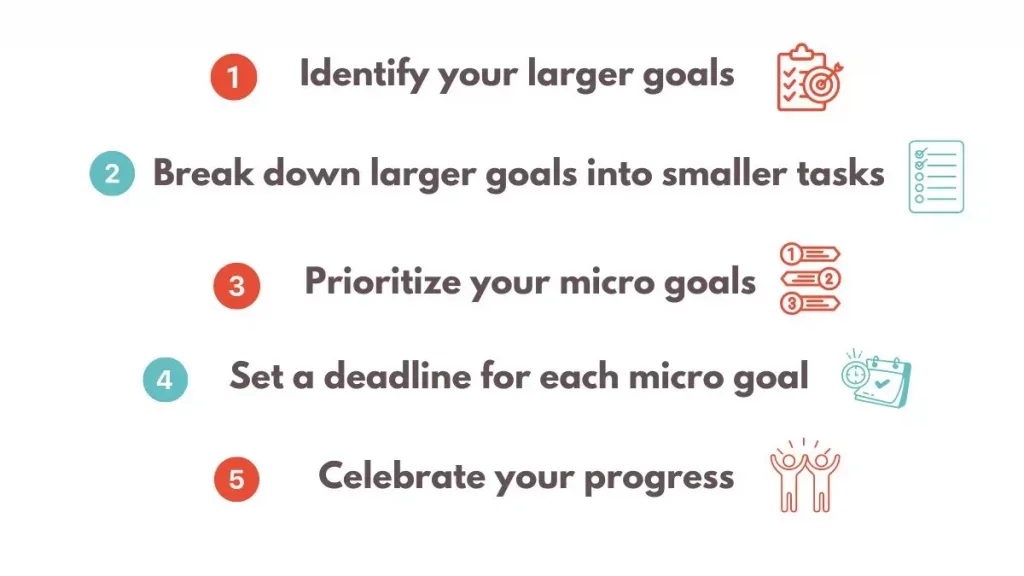
If you’re currently working with a therapist, micro-goals can be an excellent focus for sessions especially when progress feels stalled.
January doesn’t require perfection or reinvention. It requires permission to start where you are.
Whether someone is beginning therapy, returning after a difficult season, or simply rethinking how they approach change, micro-goals offer a psychologically sound entry point one that respects both the brain and the emotional system.
At Safe Space Counseling Services, we often remind clients:Change doesn’t begin with doing more. It begins with doing what feels possible and doing it consistently.That is where sustainable growth takes root.